VVJ Gallery, Vilnius – 23rd October - 19th November 2025
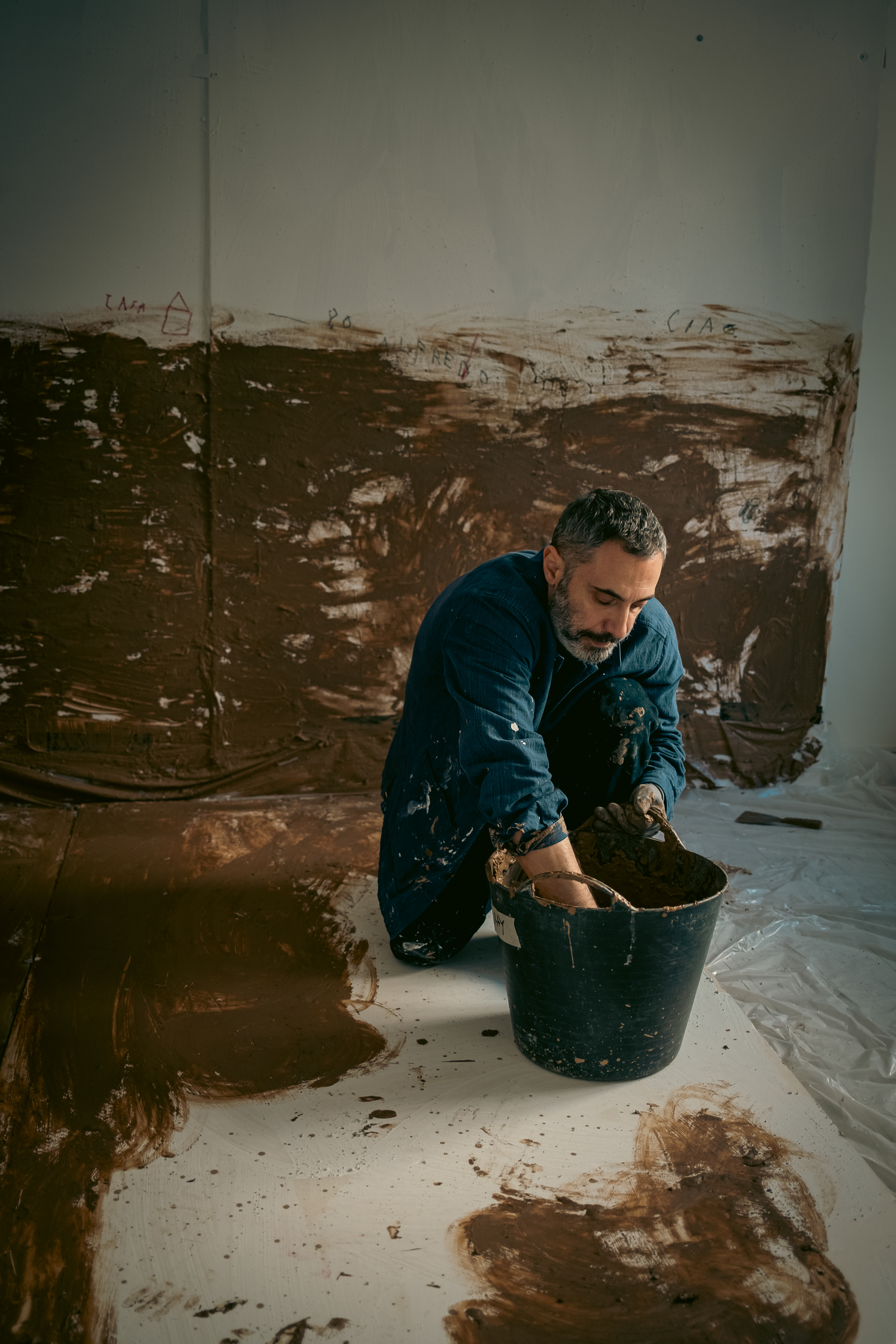
Work in Progress / Previous is the result of a two-week residency during which the gallery became Simone Brillarelli’s studio.
The word progress in the title is crossed out and replaced by previous, suggesting that growth often happens through return — through revisiting and reworking what once was.
The exhibition unfolds as a journey backward in time, where each room revisits a phase in the artist’s life and practice.
The word progress in the title is crossed out and replaced by previous, suggesting that growth often happens through return — through revisiting and reworking what once was.
The exhibition unfolds as a journey backward in time, where each room revisits a phase in the artist’s life and practice.
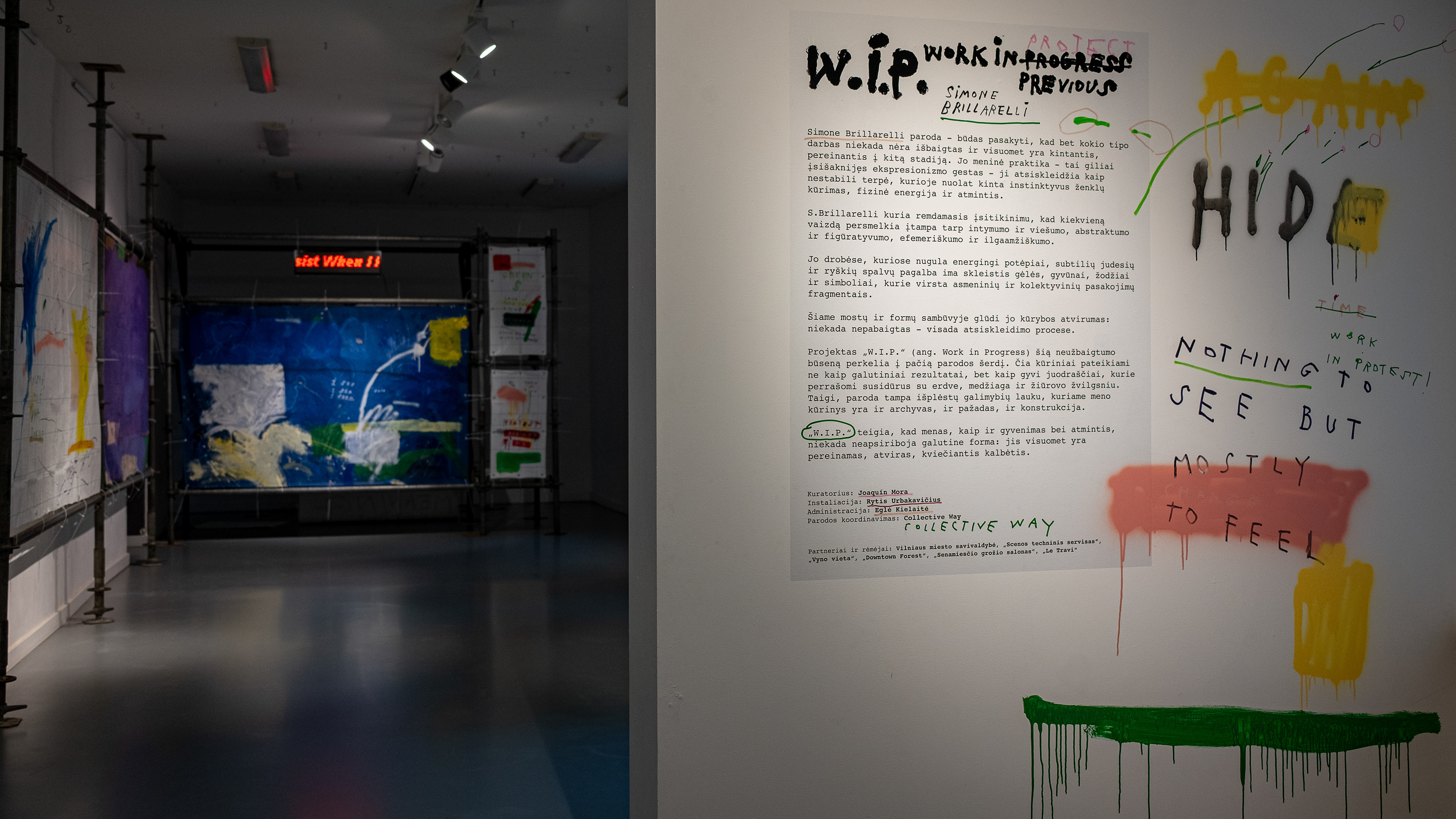
Room 1 — Here and now (The Present/Construction)
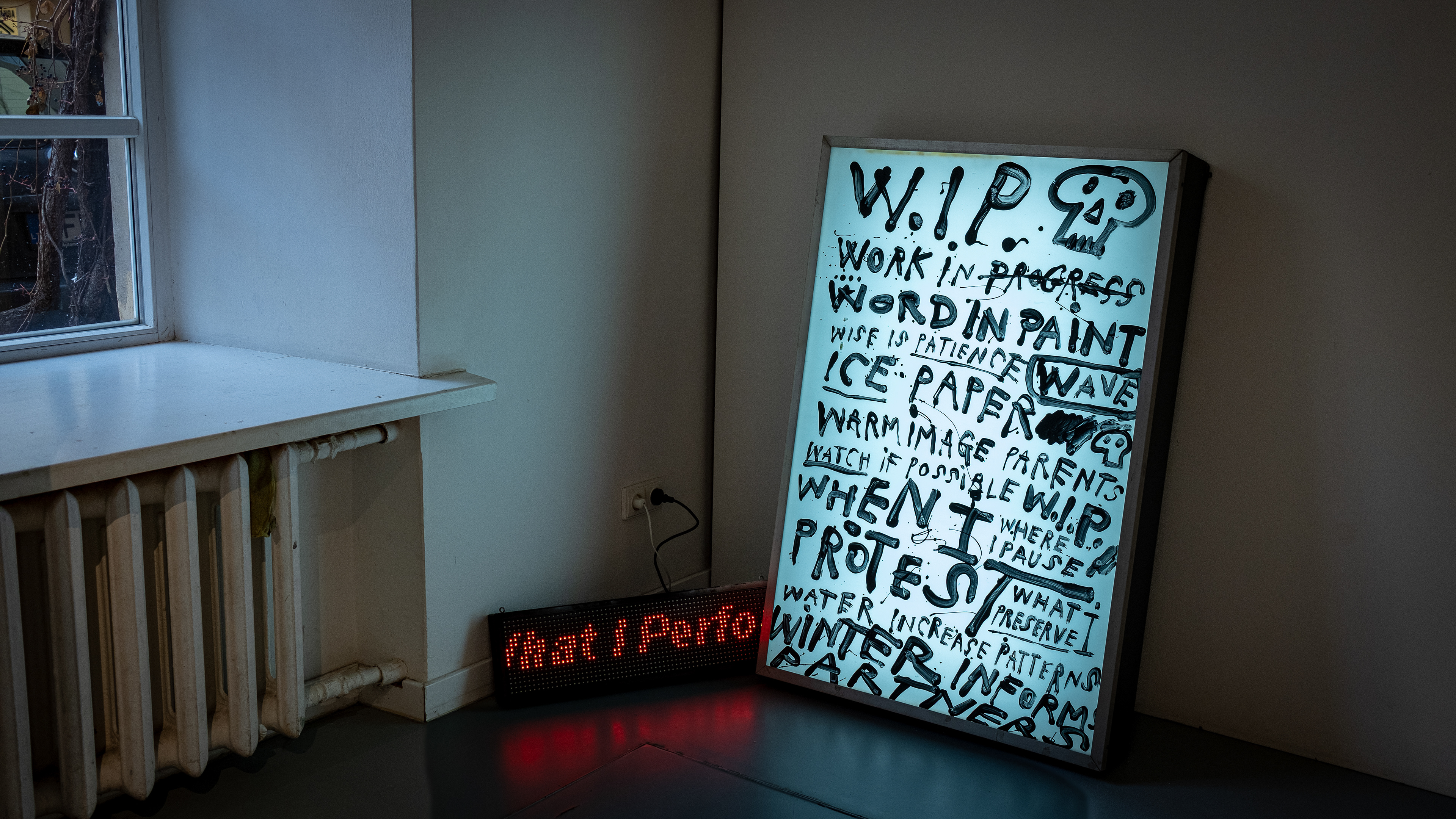
Site specific installation: metal structures, pvc tarpaulin, cotton fabric, light box, led displays, acrylic paint, oil stick, graphite, pens
The first room, built from materials drawn from the world of construction, introduces the theme of transformation and process.
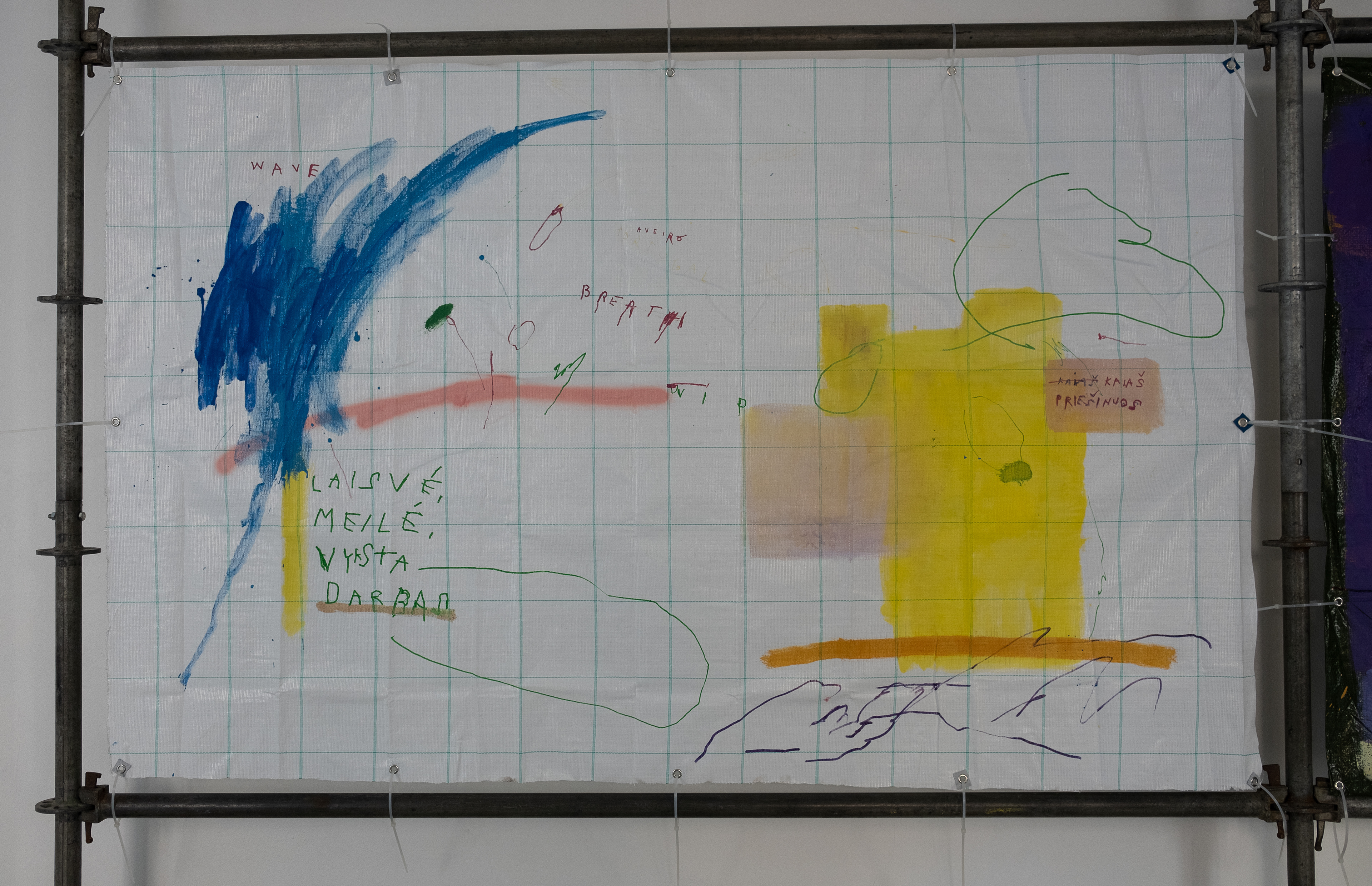
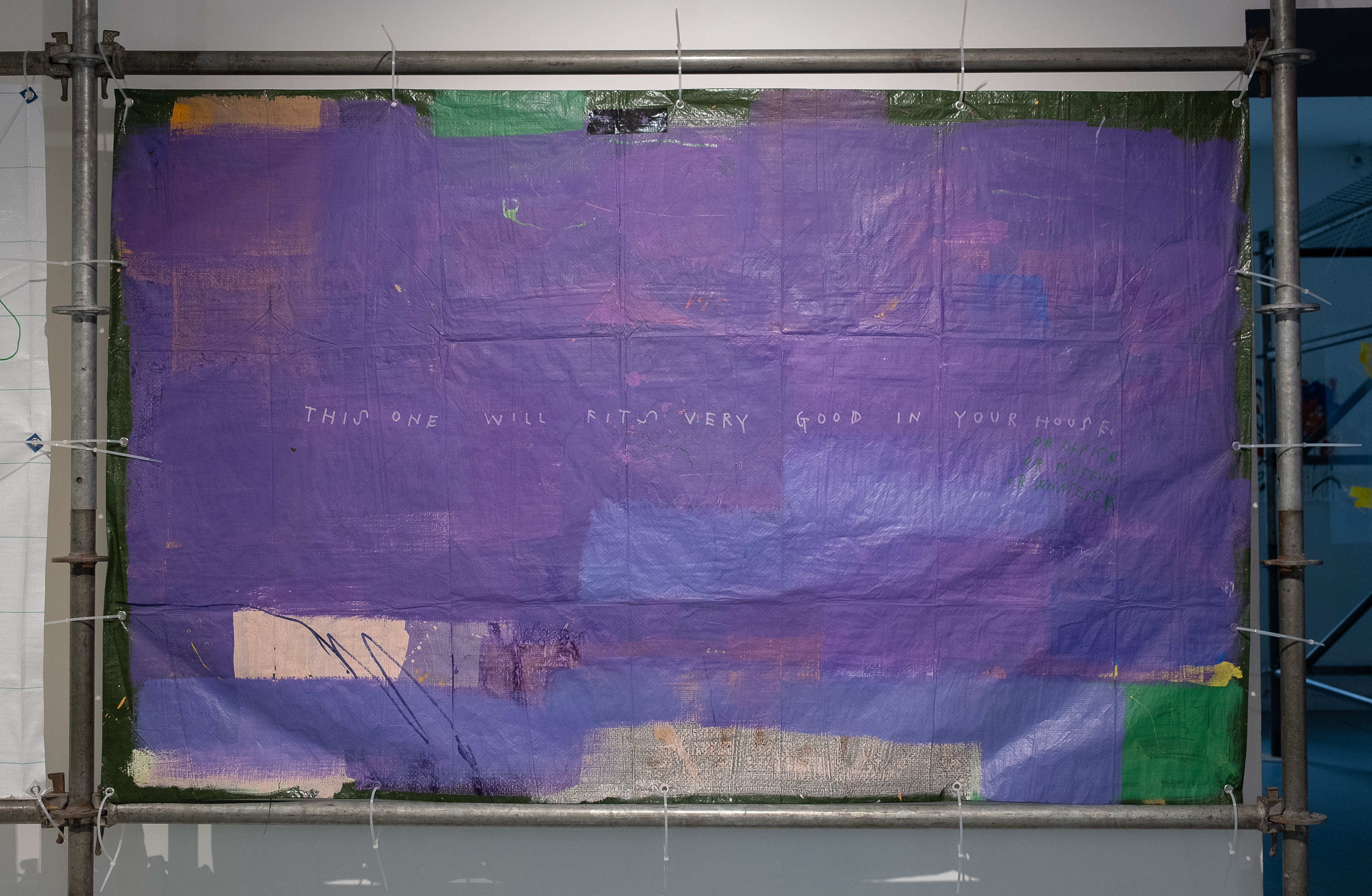
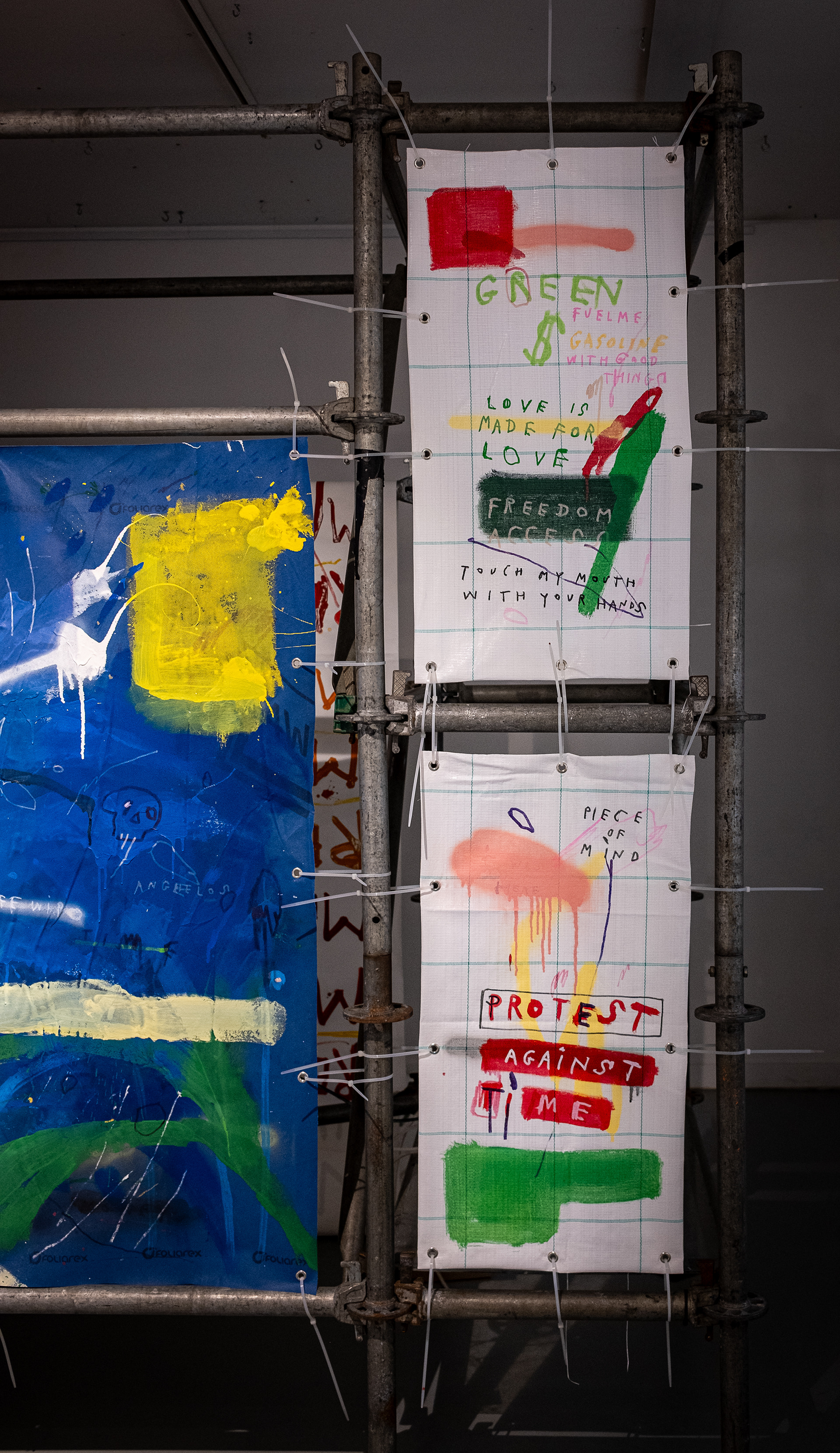
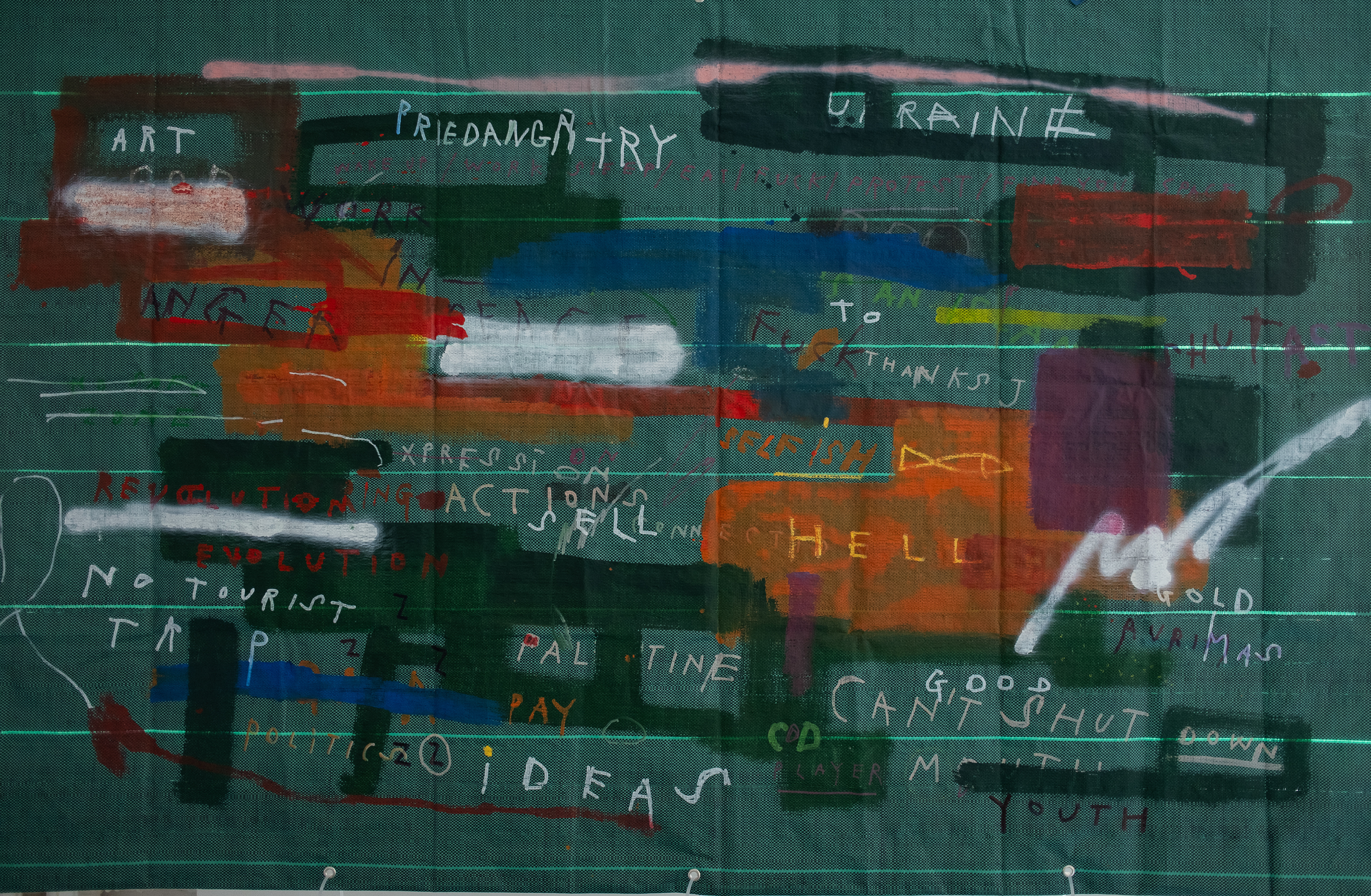
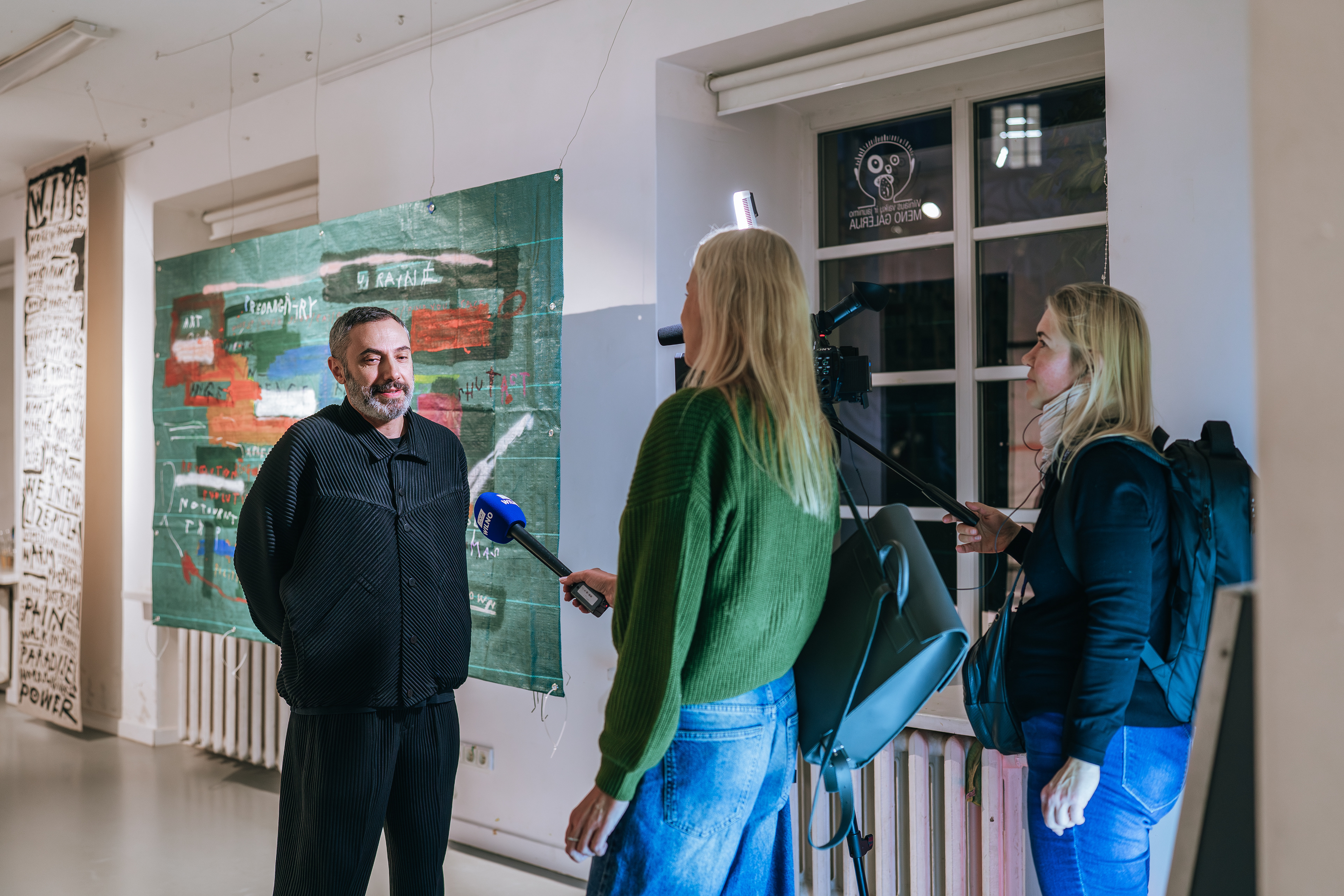
Large PVC sheets hang from the walls like protective tarps on a building site, painted with broad fields of color, multilingual writings, and casual marks, as if left by passersby on temporary surfaces.
It is a space that speaks of impermanence and transition — an environment in constant change, where art mirrors a collective and unstable present.
Large PVC sheets hang from the walls like protective tarps on a building site, painted with broad fields of color, multilingual writings, and casual marks, as if left by passersby on temporary surfaces.
It is a space that speaks of impermanence and transition — an environment in constant change, where art mirrors a collective and unstable present.
Room 2 — Private Garden (Painting as Movement/Expression)
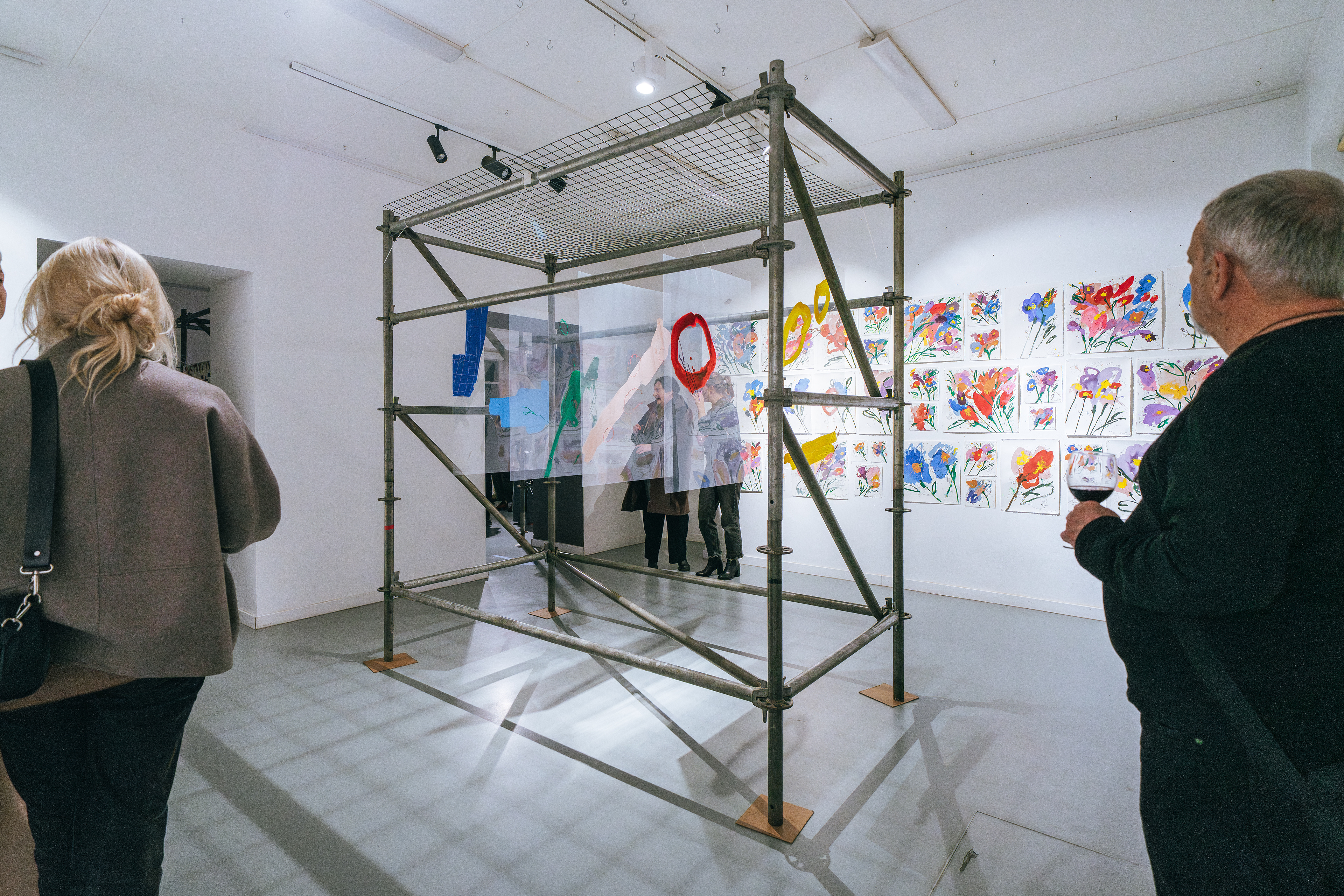
Site specific installation: metal structures, transparent pvc sheets, Amatruda cotton paper, acrylic paint, oil stick, graphite, pens
The second room explores the instinctive and physical nature of painting.
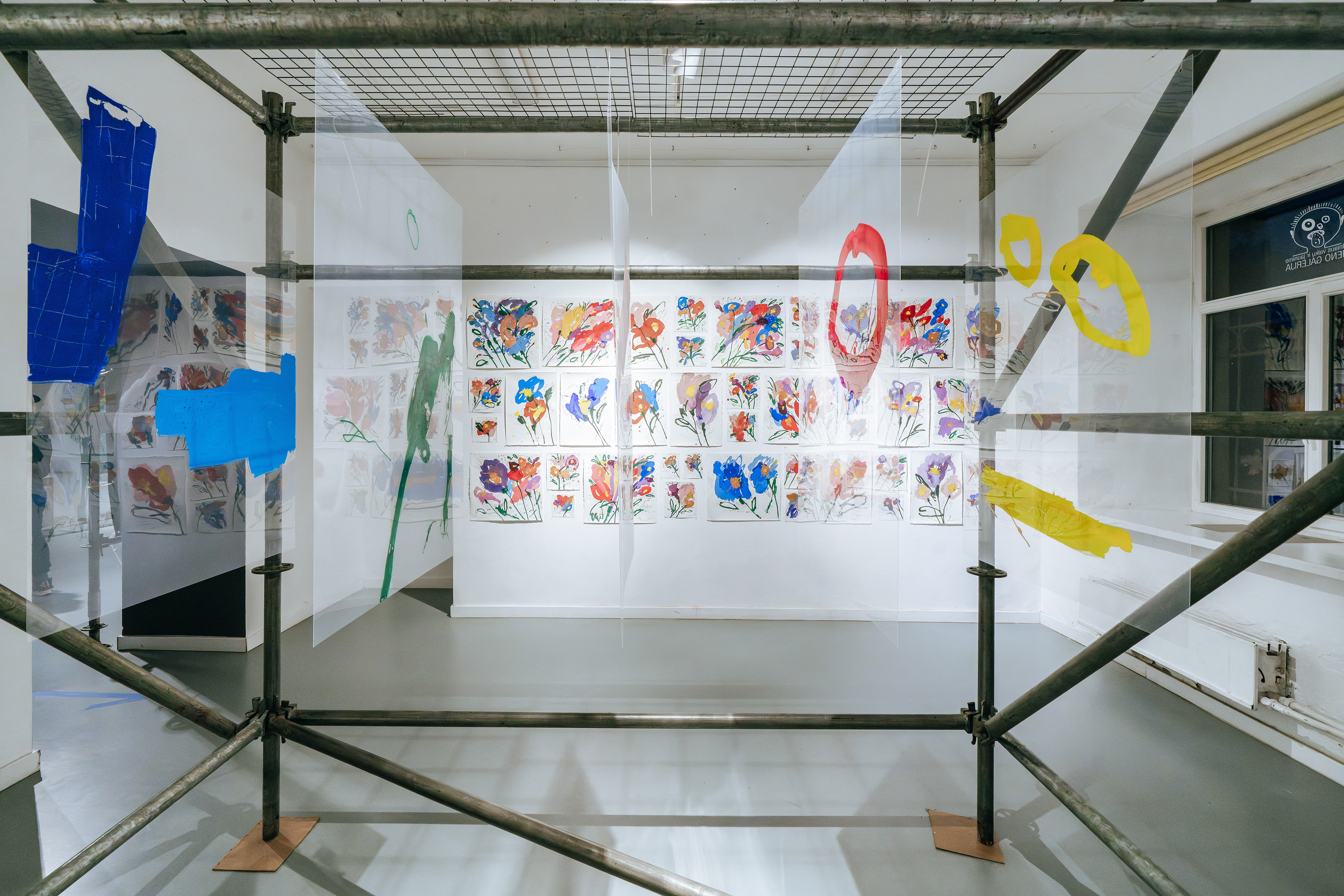
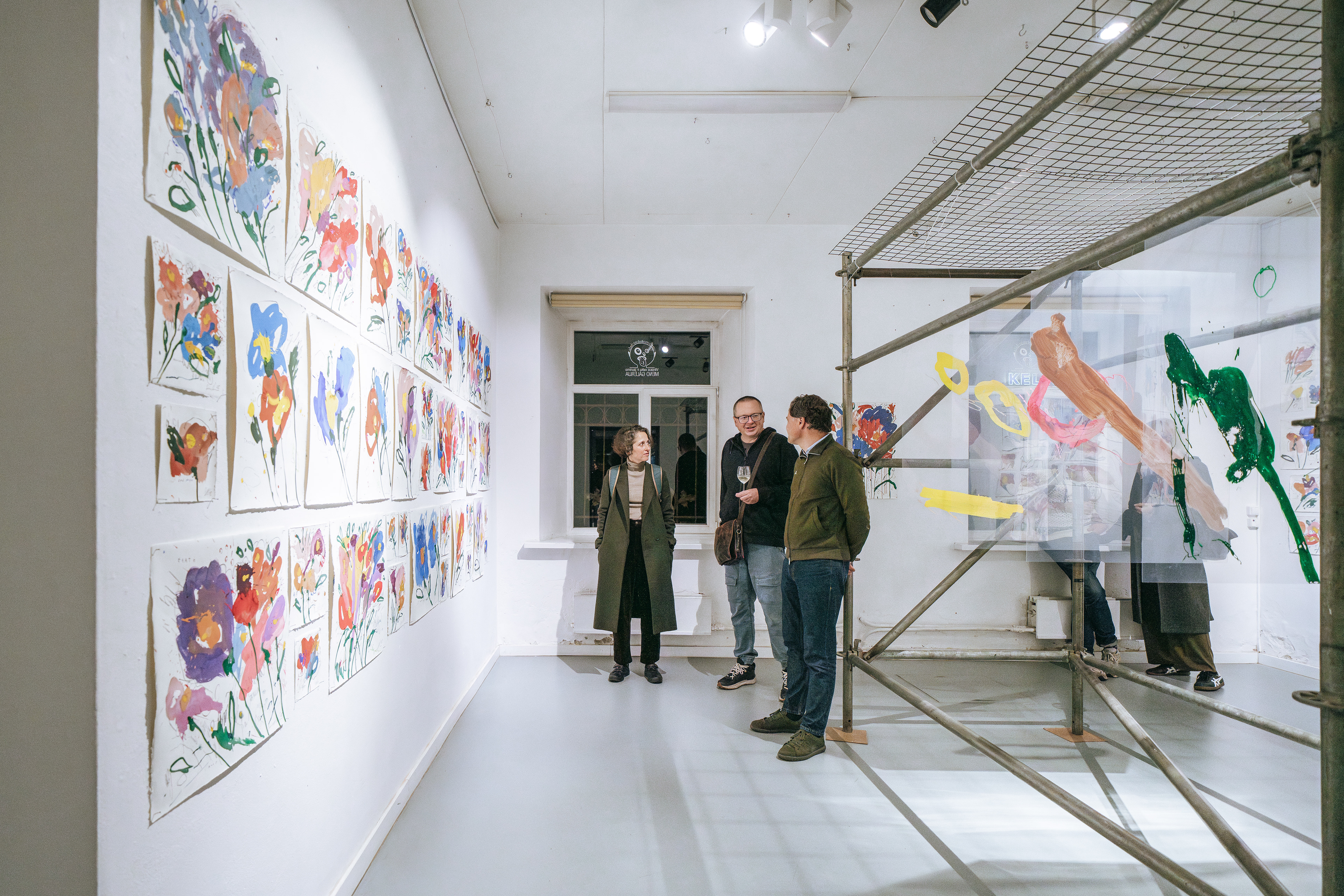
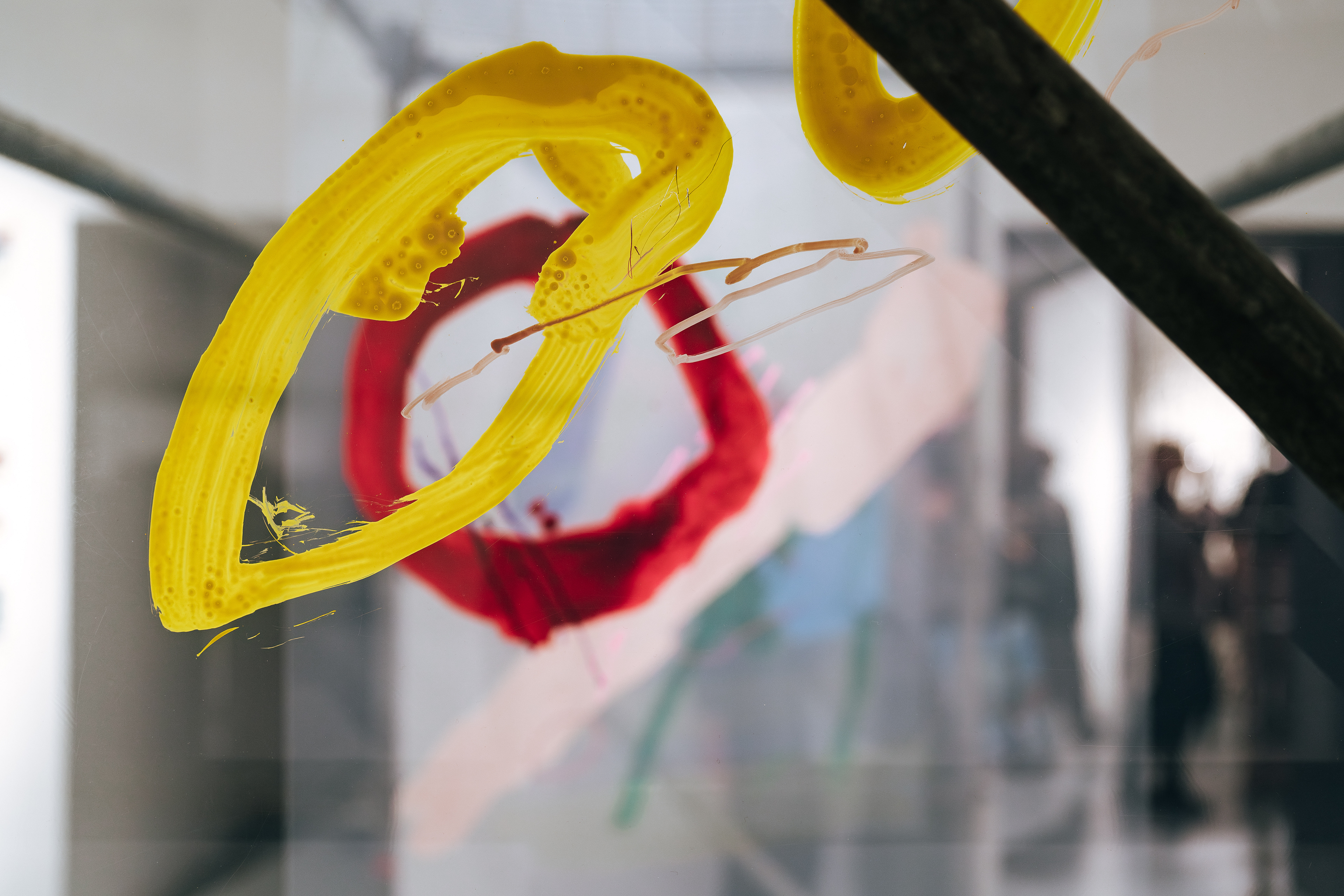
At its center stands an installation of painted transparent layers that form a complete image only when viewed from a precise angle.
On walls paper works. All the room speaks is a reflection on the freedom of gesture, the impermanence of form, and the need to shift perspective in order to perceive unity.
At its center stands an installation of painted transparent layers that form a complete image only when viewed from a precise angle.
On walls paper works. All the room speaks is a reflection on the freedom of gesture, the impermanence of form, and the need to shift perspective in order to perceive unity.
Room 3 — La Prima Volta (Light and Body/Community)
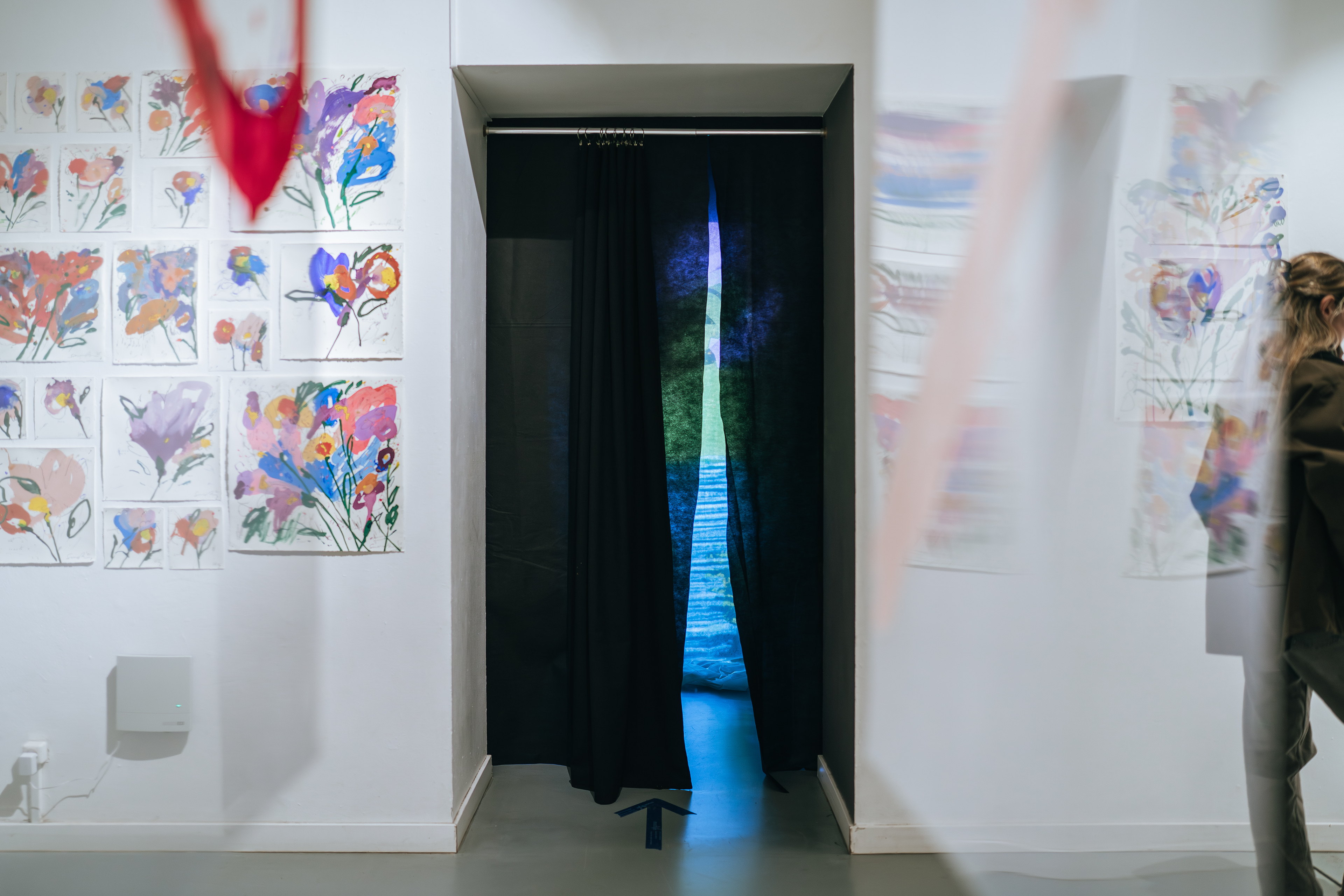
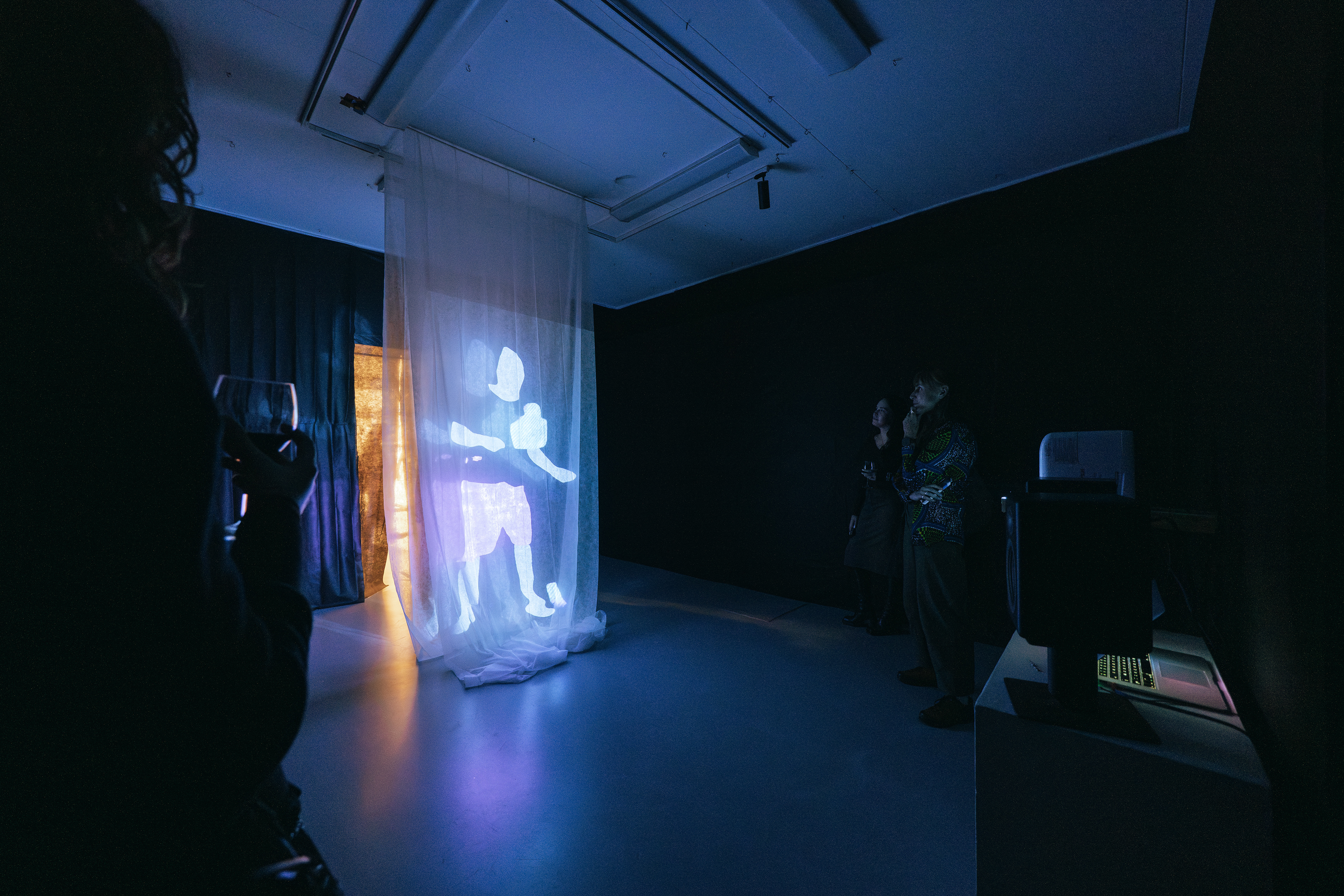
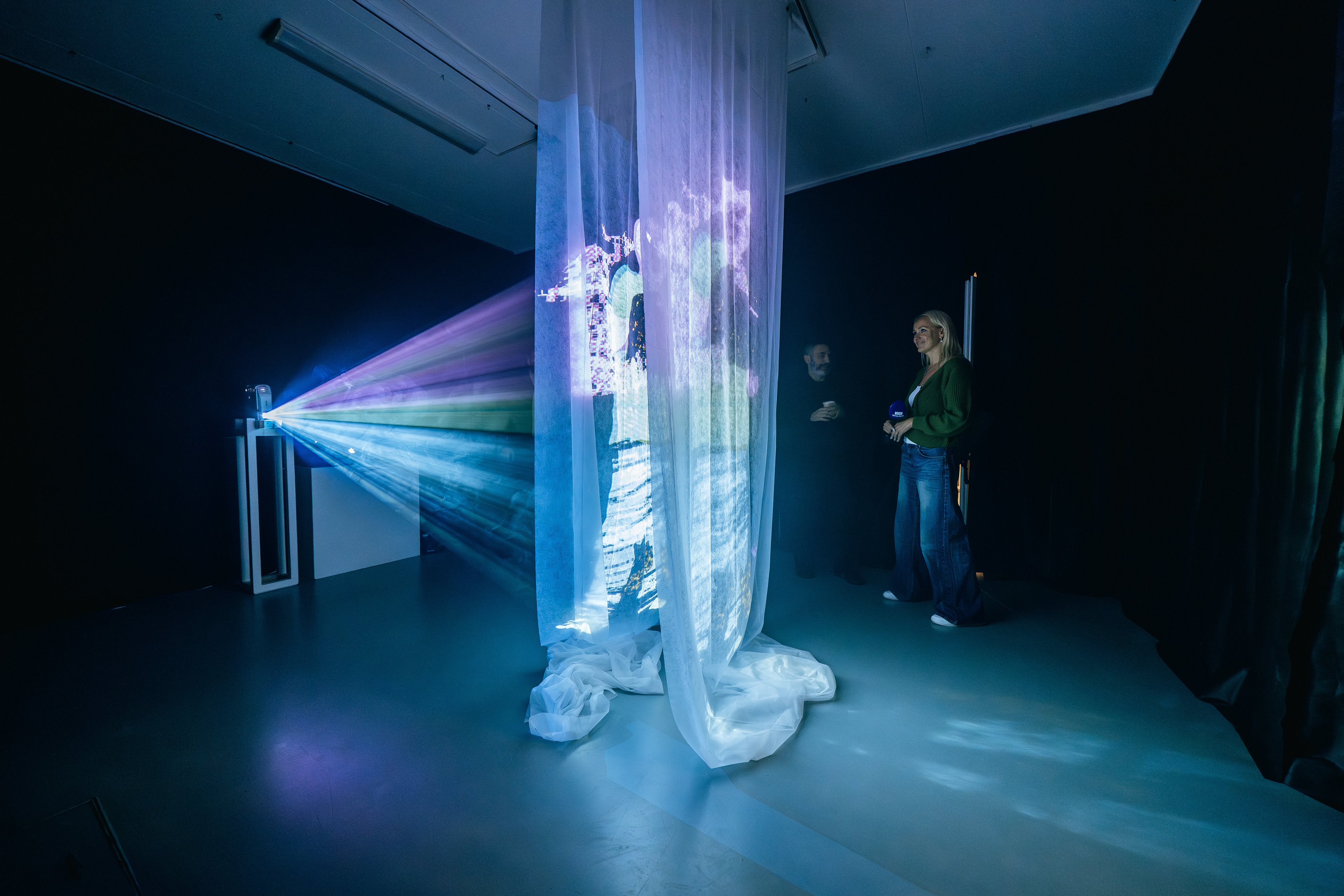
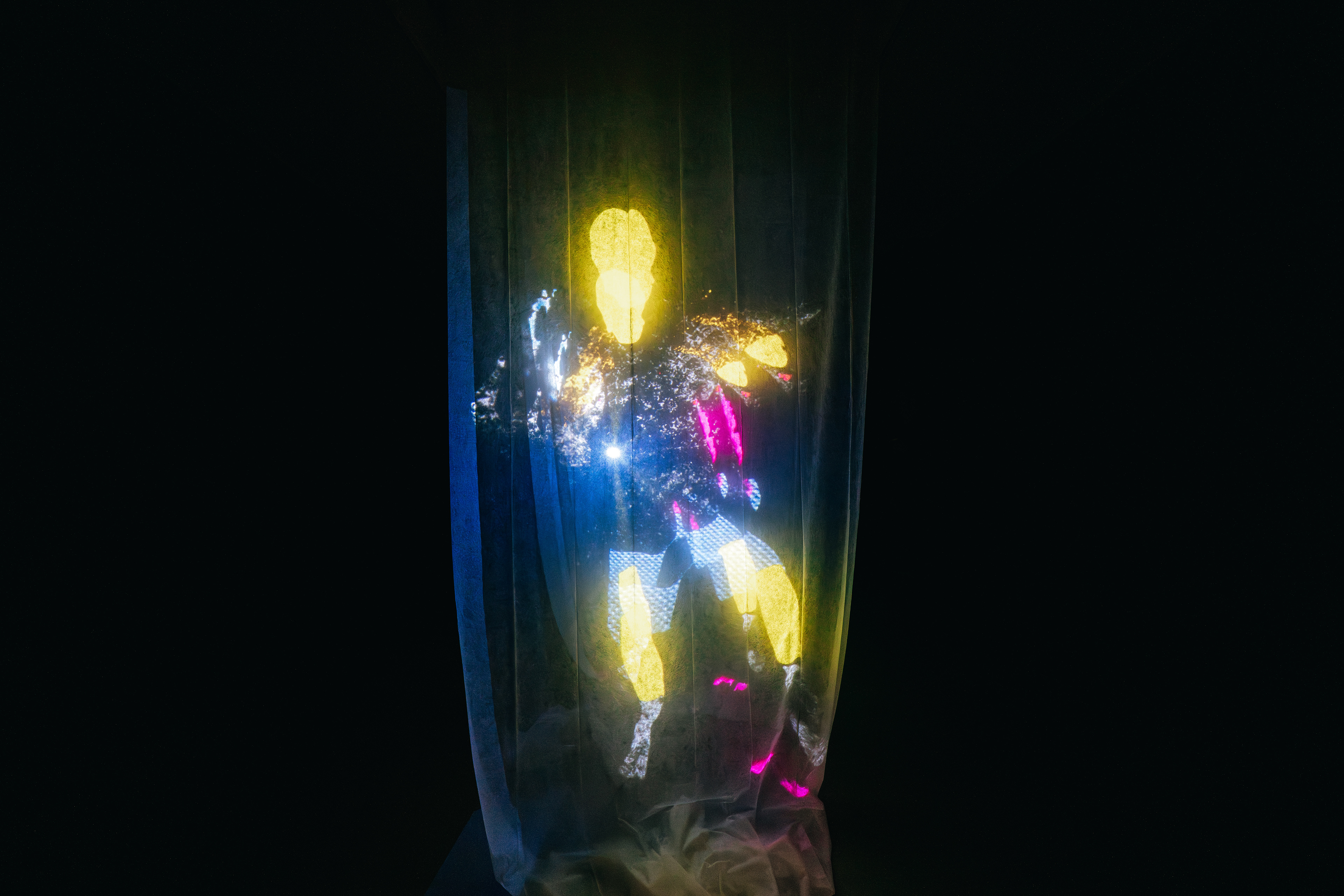
Site specific A/V installation: projection on tulle fabric - 7':35" video, sound composed by Francesco Liede Roccati
In the third room, painting transforms into light and motion.
An audiovisual installation features a series of dancers whose bodies fragment and recompose into new hybrid figures.
The work evokes rave and club culture, where individual identity dissolves into a collective, fluid, and tribal body.
Dance becomes a shared language — a rhythm that connects and transforms.
An audiovisual installation features a series of dancers whose bodies fragment and recompose into new hybrid figures.
The work evokes rave and club culture, where individual identity dissolves into a collective, fluid, and tribal body.
Dance becomes a shared language — a rhythm that connects and transforms.
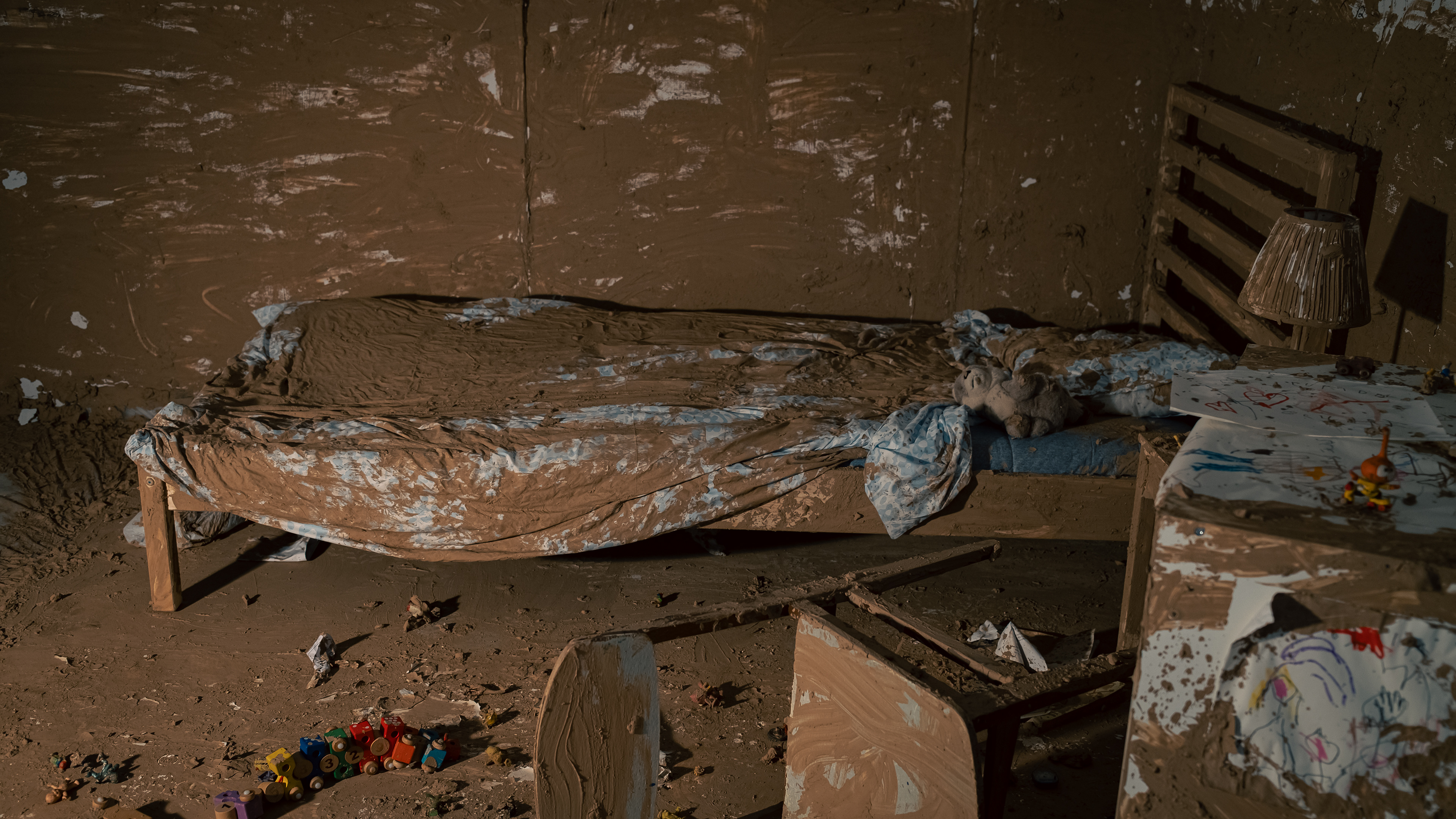
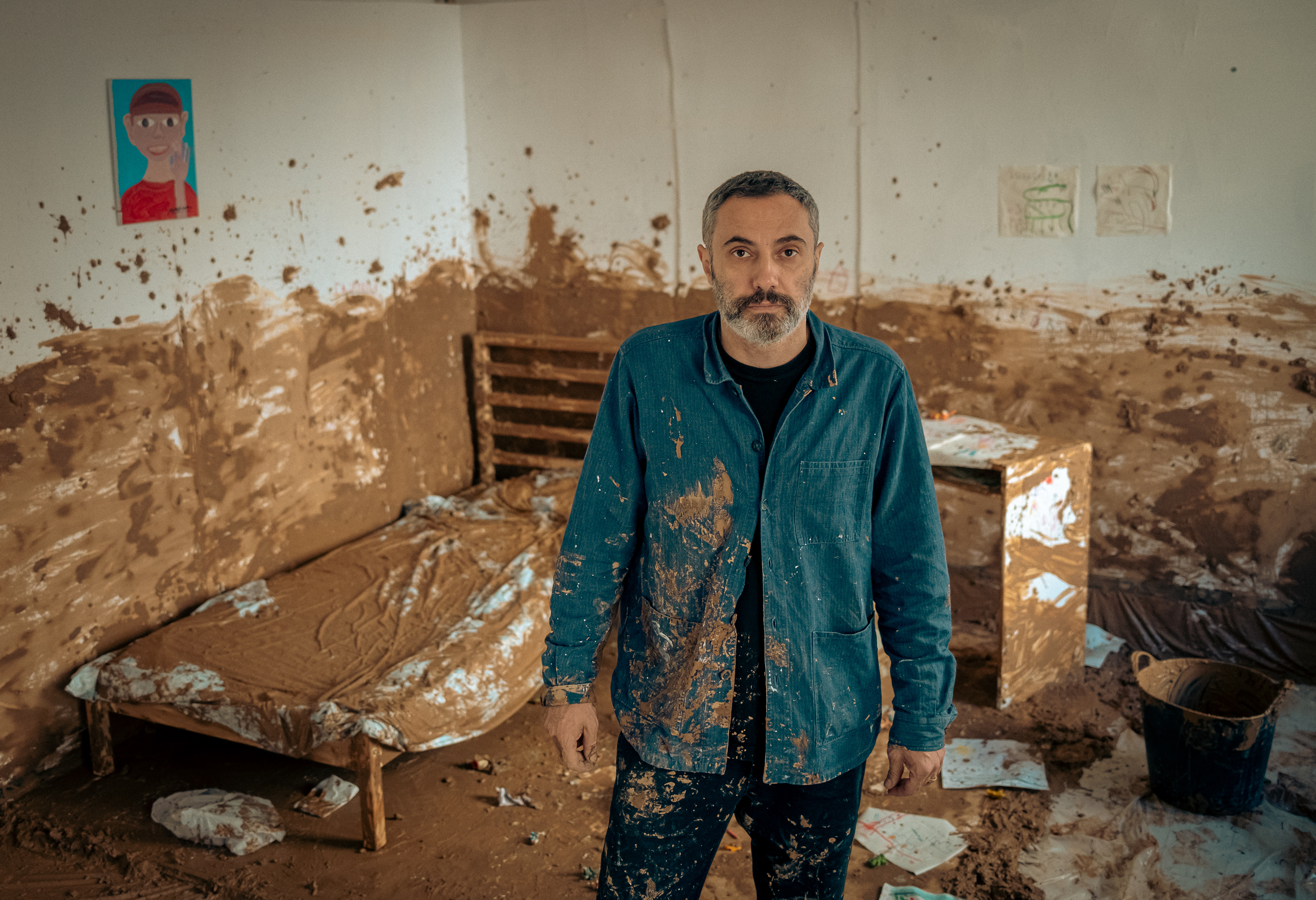
Room 4 — 1992 (Matter/Memory)
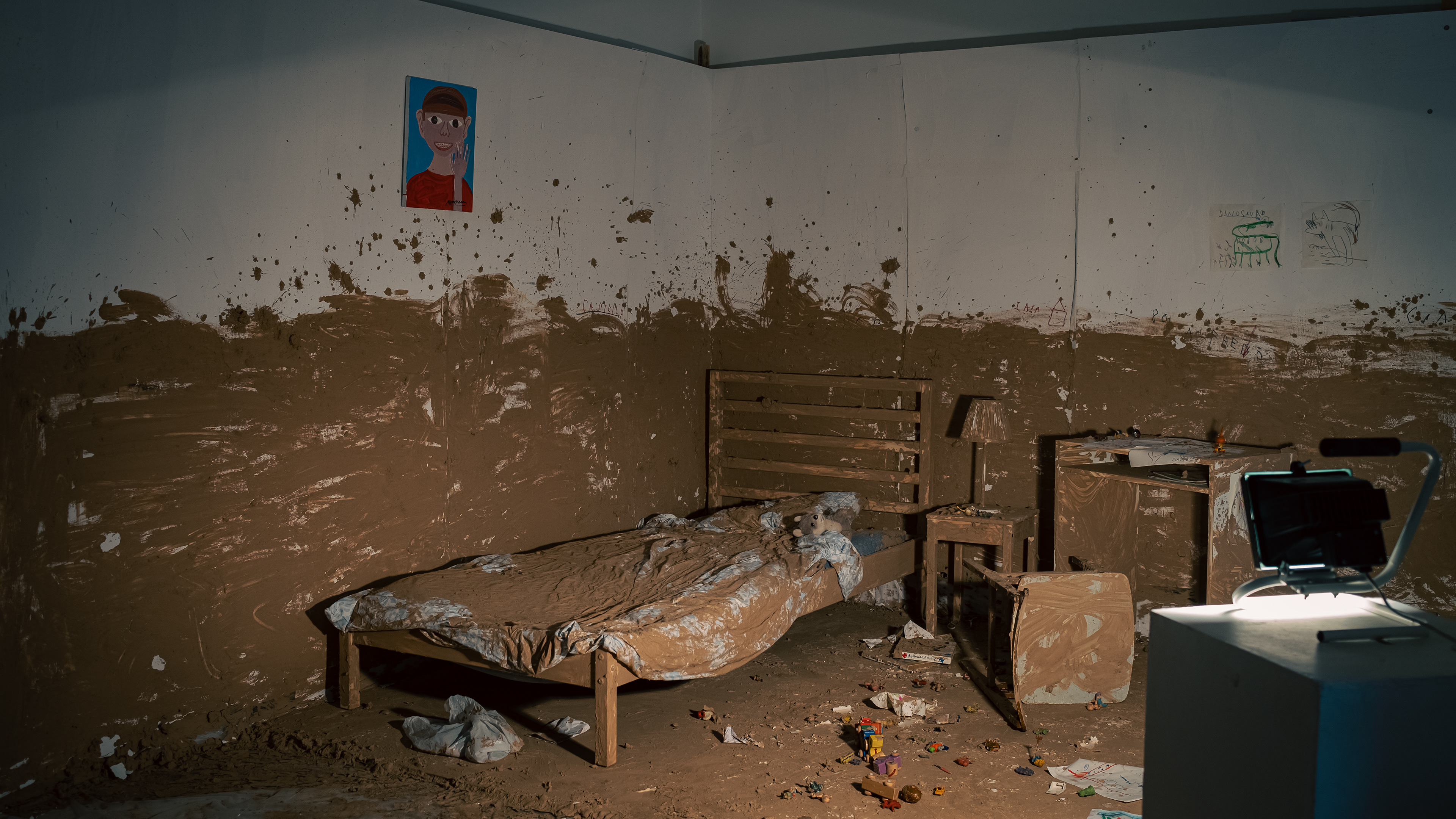
Site specific installation: furniture, toys, drawings on paper, painting on canvas 20x30 cm, raw Lithuanian clay
The final room is an intimate, autobiographical reconstruction: a domestic interior covered in mud.
The work refers to a real flood experienced by the artist in 1992, which destroyed his childhood home.
Original objects, clay, and earth compose a landscape suspended between destruction and rebirth, where memory becomes tangible matter — something that can be shaped, confronted, and transformed.
The work refers to a real flood experienced by the artist in 1992, which destroyed his childhood home.
Original objects, clay, and earth compose a landscape suspended between destruction and rebirth, where memory becomes tangible matter — something that can be shaped, confronted, and transformed.
Curated by Joaquin Mora
Produced by Collective Ways
photo by Joaquin Mora and Giedrius Stonkus